Bedding & Sleep Comfort
Wool Mattress Toppers: How Natural Fibers Shape Sleep Comfort
A wool topper can bring a softer feel to a mattress while helping manage the warmth and moisture that build up during the night. The secret is in the details: wool type, fill quantity, quilting, cover fabric, mattress fit, and the care you are prepared to give it.
A bed can feel almost right and still leave you wishing for a little more comfort. Perhaps the mattress seems too firm at the shoulders, or the surface feels clammy as the night goes on. Replacing the entire mattress is a big decision—and a big expense. A topper offers a more modest adjustment, adding a layer between the mattress and the fitted sheet.
Wool has a distinctive place in that conversation. Soft and resilient, its fibers can add gentle cushioning without the dense, sinking sensation some sleepers associate with thicker foam layers. Wool is also known for managing moisture and helping buffer temperature changes. Those qualities make it appealing to people who want a more balanced sleep surface, though no fiber can guarantee that every sleeper will feel cool or comfortable.
Shopping for wool mattress toppers is less about chasing a single promise and more about matching construction to your preferences. A lightly filled, closely quilted pad may feel quite different from a generously filled topper. And the word “wool” alone does not tell you how much cushioning you will get, whether the topper can be washed at home, or how securely it will fit your mattress.
What a wool topper can—and can’t—change
A topper is an add-on comfort layer, not a repair kit for every mattress problem. Wool filling can soften the surface and provide some cushioning, but a relatively thin pad is not designed to transform a badly sagging or unsupportive mattress. If the mattress has deep impressions, broken components, or a pronounced slope, adding a topper may simply place a new layer over an underlying problem.
For a mattress that remains structurally sound but feels a touch firm, a wool layer may make the surface more inviting. It can also add a little separation between the sleeper and the mattress itself. The sensation will depend on the wool’s loft, the amount of fill, and how the material is held in place. Quilting, for example, helps distribute the filling but may compress the surface into a flatter, more structured feel.
Think of the topper as a fine adjustment rather than a dramatic makeover. If you are unsure whether you want a little softness or a substantial change, consider how much extra height and cushioning you actually need. More fill is not automatically better: a lofty layer can feel plush, but it may also alter the way the fitted sheet fits and make the bed feel warmer or less stable to some sleepers.
Why wool feels different from other fibers
Wool is a natural fiber with a springy structure. Its fibers can compress under pressure and recover to some degree, contributing to a cushioned, gently resilient feel. In a topper, that quality offers a different experience from a flat sheet or a thin protective cover: the filling creates a layer of loft, while the quilted construction helps keep it from shifting too freely.
Wool is also valued for moisture management. During sleep, the body releases heat and moisture, and the bedding system influences how that feels at the skin. Wool can absorb moisture within its fibers and release it gradually into the surrounding air. This may help the sleep surface feel less damp, although the result depends on the whole bed: the mattress, sheets, room conditions, sleepwear, and individual temperature preferences all play a part.
Temperature regulation is often described as wool’s headline feature, but it is useful to interpret the phrase carefully. Wool does not actively cool a bed in the way an air conditioner does. Instead, its insulating and moisture-managing characteristics can help moderate the feel of a sleep surface. Some people find that balance comfortable across seasons; others may prefer a thinner layer or different materials. Personal experience matters more than a broad claim on a label.
That nuance is important when comparing wool bedding with cotton, down alternative, or foam. A cotton-filled pad may provide familiar, breathable softness. A down-alternative layer can deliver a lofty, cushioned feel. Foam may create more contouring, depending on its design. Wool occupies its own middle ground: naturally textured, gently supportive, and often chosen for its combination of cushioning and moisture management.
Start with the feel you want
Before comparing brands or materials, describe the problem you are trying to solve. “I want a softer bed” is a useful start, but a more specific goal makes selection easier. Are you looking for a slight cushion under pressure points? A more substantial, pillowy surface? A layer that feels less synthetic? Or a practical way to protect the mattress while adding a little comfort?
For a gentle change, look for a relatively slim construction and check how the filling is quilted. For more loft, pay attention to the amount of fill and the topper’s finished thickness, not just the material name. Product descriptions should ideally explain the filling, cover, construction, and care instructions. If those details are missing, it may be difficult to predict the feel or maintenance needs.
Your sleep position can offer clues, but it is not a rigid rulebook. Side sleepers often pay close attention to cushioning around the shoulder and hip; back sleepers may prefer a surface that feels even and supportive; stomach sleepers may be cautious about adding too much softness. Body shape, mattress firmness, and personal comfort can matter as much as position. The best choice is the one that feels comfortable without compromising the support you already rely on.
Fill, quilting, and cover: the details behind the feel
“Wool-filled” tells you what is inside, but not how the topper is made. Fill quantity is one useful point of comparison because it influences loft and cushioning. Yet a number on its own does not guarantee a particular sensation: fiber preparation, quilting pattern, and the way the fill is distributed also affect how the layer behaves.
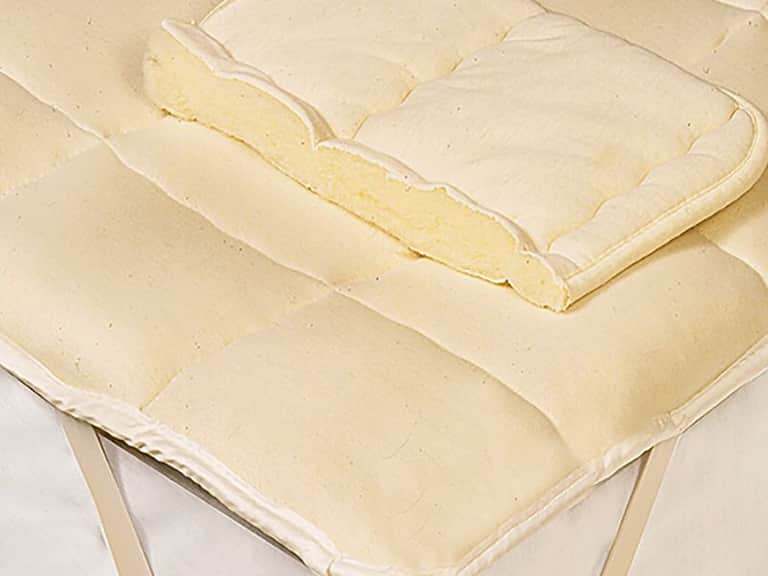
Quilted channels or stitched sections help limit movement inside the topper. That can make the surface feel more even and help the filling stay in place over time. The trade-off is that quilting may reduce the feeling of uninterrupted loft. Elastic corner bands, fitted skirts, or a deep-pocket design can help keep the layer secure. Look closely at the attachment method if you move around during sleep or have a thicker mattress.
The cover matters, too. Cotton is commonly used for its familiar, breathable feel, while the weave and finish can influence how smooth or textured the surface feels. A cover that is too delicate for your household routine may require extra care; a sturdier construction may be easier to live with but feel different against the hand. Check whether the topper is intended to be used under a fitted sheet, as most are, and follow the manufacturer’s directions.
Other practical details deserve a place on the checklist: dimensions, mattress depth, corner or skirt design, warranty terms, and whether the topper is reversible. Confirm the measurements rather than relying only on a size name. Standard mattress dimensions can vary by market, and even a small mismatch may cause bunching or make it harder to keep the sheet in place.
A real-world example: a wool-filled mattress pad
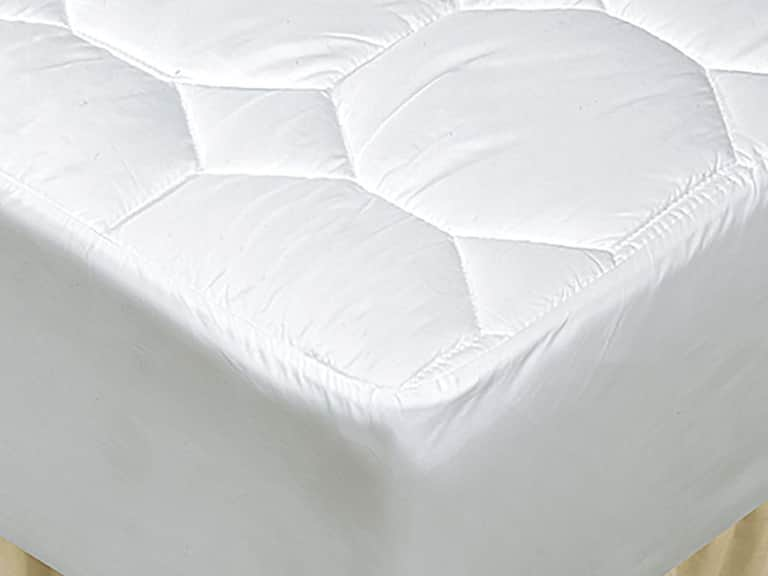
One example in the wool bedding category is the DownTown Company Wool-Filled Mattress Pad. Its listed construction includes 100% Merino wool filling, a quilted cotton jersey cover, and elastic corner bands. Those details make it a useful illustration of what to examine when comparing wool layers: the fiber, the cover material, the quilting, and the method used to secure the pad.
The product is described as adding gentle cushioning and offering moisture-wicking comfort. Its care instructions specify dry cleaning, a point worth considering before purchase. A wool pad that needs professional cleaning may suit someone who is comfortable planning around that routine; it may be less convenient for a household that expects to machine-wash every bedding layer. Care requirements are not a small-print afterthought—they are part of the product’s day-to-day fit.
It is also described as using elastic anchor bands rather than an all-around deep-pocket skirt. That distinction may influence how it sits on a particular mattress. Check the listed sizes and compare them with your mattress measurements, especially if the mattress is unusually deep or has a pillow top. Product specifications can help narrow the choices, but comfort remains personal and cannot be established from material descriptions alone.
Wool topper or mattress pad?
The terms “topper” and “pad” are sometimes used loosely, and product names do not always reveal the exact thickness or purpose. In general, a topper suggests a more noticeable comfort layer, while a mattress pad may be thinner and may emphasize surface protection as well as a modest change in feel. But the construction—not the label—is the better guide.
If you mainly want to shield the mattress from ordinary wear, a thin, washable protector may be more practical than a wool-filled layer. If your priority is a little cushioning and a natural-fiber surface, a wool pad or topper may be a better match. Some products try to serve both purposes, but do not assume that a wool layer is waterproof or stain-proof. Check the product specifications and use a separate protective layer if spill protection is important.
Layering can also change the feel of the bed. A protector, wool pad, fitted sheet, and mattress each contribute something, and several thick layers may trap more warmth or shift more easily than one carefully chosen addition. Keep the overall stack in mind rather than judging a topper in isolation.
Care and longevity: read the label before the first night
Wool needs thoughtful care. Some wool products are machine washable, while others are labeled for dry cleaning or spot cleaning only. Construction, cover fabric, and fill treatments can determine what is safe. Do not assume that a natural fiber can be washed at home, and do not rely on a generic wool-care tip when the product’s own instructions say otherwise.
Before making the bed, check the care label and keep it accessible. If the instructions call for dry cleaning, consider whether that is manageable for you. For small marks, follow the manufacturer’s guidance rather than soaking or scrubbing the whole layer. Regular airing may help keep bedding feeling fresh, but airing is not a substitute for cleaning when the product needs it.
Use a fitted sheet that holds the topper and mattress together without excessive tension. If the corners keep lifting, check the topper’s fit and the pocket depth of the sheet. Avoid folding or compressing a wool topper for long periods unless its instructions allow it. When storing it, a clean, dry environment and enough room to avoid crushing the filling can help preserve its shape.
Even well-made bedding will change with use. Repeated compression, washing, and everyday friction can affect loft over time. A warranty may cover particular defects but not normal wear, so review the terms instead of treating warranty length as a promise of unchanging comfort. Proper fit and care can support longevity, but no topper is maintenance-free.
Common myths worth setting aside
- “Wool always keeps you cool.” Wool can help manage moisture and moderate temperature, but it is not an active cooling system. The entire bedding setup and the sleeper’s preferences influence the result.
- “Natural means maintenance-free.” Wool products have specific care needs, and some require dry cleaning. Read the label before choosing.
- “A topper can fix any mattress.” A comfort layer may soften a sound mattress, but it cannot restore a sagging or damaged foundation.
- “All wool toppers feel alike.” Fill amount, quilting, cover fabric, and fit can create significantly different experiences.
- “More loft is always more comfortable.” A thicker layer can add cushioning, but it may also change support, height, and warmth. The right amount depends on the bed and the sleeper.
A practical checklist before you buy
Use a few simple questions to compare options without getting swept up in broad promises:
- What change do I want: a softer surface, a little extra loft, moisture management, or mattress protection?
- How much fill does the product contain, and what is its finished thickness?
- What is the cover made of, and how is the wool quilted or secured?
- Will the attachment style fit my mattress depth and stay in place?
- Are the product’s dimensions appropriate for my mattress?
- Can it be machine washed, spot cleaned, or only dry cleaned?
- Does the product offer water resistance, or would I need a separate protector?
- Can I return or exchange it if the feel is not right, and what conditions apply?
That last question is particularly helpful because “soft” and “comfortable” are personal judgments. Check the trial or return policy before buying, including any time limits, packaging requirements, or cleaning restrictions. A return policy is not a substitute for careful selection, but it can make a subjective purchase less uncertain.
The bottom line on wool mattress toppers
Wool mattress toppers appeal to sleepers looking for natural-fiber cushioning, a softly resilient surface, and bedding that can help manage moisture and temperature. Their performance depends on a collection of practical choices: how much wool is used, how it is quilted, what covers it, how it fits, and what care it requires.
Start with the mattress you have and the comfort change you actually want. If you need a modest softening, a wool layer may be worth considering. If the mattress is sagging, address that underlying issue first. Compare specifications, measure the bed, and be candid about whether dry cleaning or other special care suits your routine.
The best bedding choice is rarely the one with the most dramatic promise. It is the one whose feel, fit, and upkeep make sense in your bedroom—night after night. A well-chosen wool layer can be a thoughtful finishing touch, bringing a little extra softness to the bed while keeping the focus where it belongs: on comfortable, uncomplicated rest.